


Why the Next Icons Will Be Built as Objects

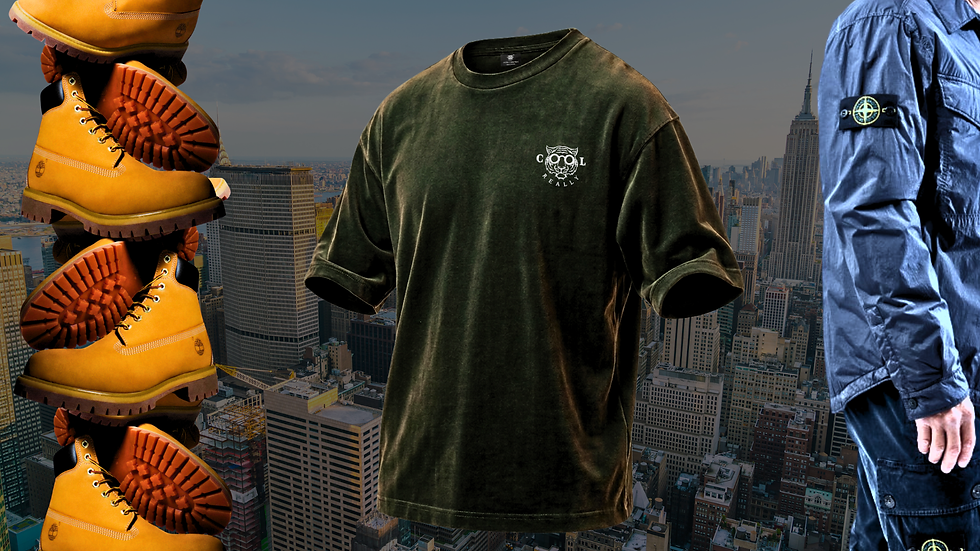
Why enduring premium products begin with function, material integrity, and design discipline, not marketing alone.
The fashion industry has become exceptionally good at creating attention.
Images travel quickly. Releases create urgency. Collaborations turn products into events. But attention and attachment are not the same thing.
The products that remain in a person's life tend to earn their place more quietly. They work. They age with use. They become familiar. Over time, they acquire cultural meaning not because a brand declares them important, but because people continue to choose them.
For REALLY COOL®, that is where product architecture begins.
The question is not simply how to make a product desirable.
It is how to make the product itself worth remembering.
Function Gives Culture Something to Build Upon
Some of the most enduring objects in fashion were not originally created to become cultural symbols.
The Timberland Yellow Boot is one example.

Developed for demanding outdoor conditions, the boot was built around practical requirements such as waterproof construction and durability. Its cultural significance came later, as different communities adopted it, wore it, and gave the object meanings far beyond its original purpose.
The product did not need to begin as a fashion statement.
Its physical credibility gave people something to reinterpret.
Stone Island followed a different path, but arrived at a related idea. Under Massimo Osti, material experimentation became central to the brand's identity.
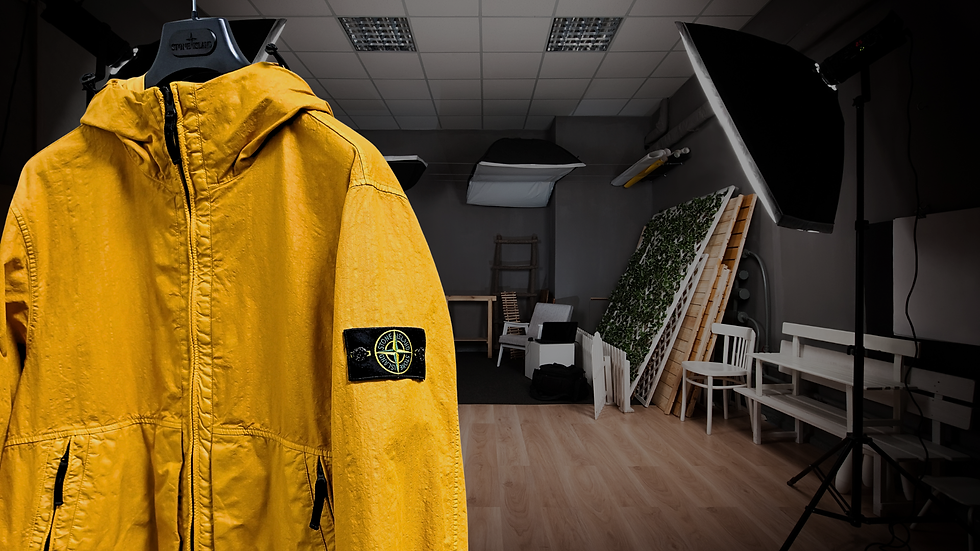
Fabrics were not simply selected to complete a garment; research into material behavior became part of the language through which the brand was understood.
These histories point to an important distinction.
Function does not automatically create culture. Culture is created by people.
But a product with a clear reason to exist gives culture something durable to build upon.
The object comes first. Meaning accumulates around it.
The Problem With Disposable Desire
Modern fashion is highly effective at creating the feeling that something matters now.
A release arrives. A collaboration creates conversation. A particular silhouette becomes recognizable. Attention moves quickly from one object to the next.
There is nothing inherently wrong with novelty.
The problem begins when novelty becomes the primary reason a product exists.
A premium essential should not depend entirely on a logo, a seasonal calendar, or a complete styling narrative to justify itself. It should possess enough material presence, proportion, and structural clarity to stand on its own.
The question is not whether a garment photographs well.
The more important question is whether someone reaches for it again.
And then again.
That is where product design becomes more interesting than product decoration.
The T-Shirt as an Object
The T-shirt is one of the most familiar objects in modern clothing.
Almost every brand can produce one. Almost every wardrobe already contains several.
That familiarity makes it deceptively difficult to improve.
When a garment is this simple, there is very little for design to hide behind. The fabric is immediately felt. The neckline is experienced the moment the garment is put on. The proportions become visible in movement. The construction reveals itself through repeated wear.
For us, a heavyweight T-shirt is therefore not simply a canvas for branding.
It is a system of decisions.
Material behavior.
Body proportion.
Shoulder position.
Neckline structure.
Seam construction.
Surface character.
The relationship between weight and movement.
None of these decisions needs to announce itself. In fact, the best ones often do not.
But together, they determine whether a familiar garment feels considered.
That is what we mean when we describe a product as an object.
It is not a generic category with more details added.
It is a familiar form resolved with greater intention.
Product Architecture as Discipline
A convincing product is rarely the result of one exceptional detail.
Its parts have to support the same idea.
Material establishes physical character.
Pattern establishes proportion.
Construction establishes stability.
Finishing establishes surface and touch.
Wear reveals whether the entire system makes sense.
This is why we think about product development as architecture.
Not architecture in the sense of adding complexity, but in the sense of making decisions that work together.
The wearer should not need to understand every technical choice. They should simply notice that the garment sits correctly, feels substantial, moves naturally, and continues to make sense as it becomes part of daily life.
Good product architecture is often invisible.
Its success is experienced rather than explained.
Beyond the First Impression
Fashion naturally rewards the new.
Product development should think further ahead. What happens after the first impression?
After the garment has been packed into a suitcase.
After it has been worn through a long day.
After it has been layered, washed, folded, and worn again.
After the initial excitement of owning something new has disappeared.
A product earns trust when it continues to be useful without becoming anonymous, and distinctive without becoming difficult to live with.
That balance is central to how we approach premium essentials at REALLY COOL®.
We are not interested in making clothing that asks to be preserved.
We are interested in making clothing designed to be used.
From Product to Object
There is a point where a product begins to behave differently in someone's life.
It stops being something they simply own.
It becomes something they reach for without thinking.
A jacket develops a particular shape through wear.
A pair of boots becomes associated with years of movement.
A T-shirt becomes part of a morning routine.
This is the transition that interests us most:
from product to object.
A product is something the market sells.
An object is something the individual keeps.
That distinction cannot be manufactured through branding alone.
It has to be earned through repeated experience.
This is also why we believe premium essentials represent one of the most demanding categories in contemporary fashion.
The opportunity is not simply to make basic clothing feel more luxurious.
It is to reconsider what makes a basic object deserving of permanence in the first place.
Better materials.
More considered construction, intentional proportions. disciplined development.
And, perhaps most importantly, a reason for the product to exist beyond the season in which it was introduced.
Designing for Permanence
We do not believe the future of fashion belongs exclusively to minimalism, technology, luxury, streetwear, or any other single category.
It belongs to products that can move between categories because they are grounded in something more fundamental.
They work, feel right, look considered, have a reason to exist.
And people continue choosing them after the initial excitement has disappeared.
That is what cultural permanence looks like from a product perspective.
It is not a campaign, not a launch moment, not the amount of attention a product receives in its first week.
It is the quiet decision someone makes months or years later:
I still want this one.
That is the standard we are trying to build toward at REALLY COOL®.
We do not see premium essentials as simplified fashion.
We see them as some of the most demanding objects to resolve properly.
Because an icon is not created when the world first notices it.
It is created when people quietly decide not to replace it.


Comments