


Why Function Creates Culture

Updated: 2 days ago

How repeated use, recognizable function, and everyday utility can turn products into symbols of identity and belonging.
Culture often forms around what people repeatedly use, not only what they repeatedly see.
Attention can make a product visible. Function can make it remain. When something is used often enough, by enough people, under enough shared conditions, its utility begins to acquire meaning beyond the original task it was designed to perform.
In design, repeated utility can become a source of recognition, identity, and eventually cultural meaning.
That shift, from useful object to cultural reference, is one of the quieter ways products enter culture.
Function Comes Before Cultural Meaning
An object does not need cultural meaning at the moment it is created.
It may begin simply by solving a problem, performing a task, or fitting into a routine. Its first value is practical. Cultural meaning, when it appears, is usually accumulated later through use rather than assigned at the beginning.
The more consistently an object serves a purpose, the more opportunities it has to become familiar, recognized, and eventually associated with particular ways of living.
Repetition Makes Function Visible
A single use creates a transaction.
Repeated use creates familiarity.
When that familiarity is shared across many people, the function itself becomes recognizable. Patterns of use begin to form.
Certain objects become associated with certain activities, environments, or communities.
This is the stage at which utility starts to leave the purely private domain and enter a more public one. What was once only practical begins to carry shared associations.
When Utility Becomes Identity
Some products eventually move beyond usefulness into identity.
This does not happen because the product is declared fashionable. It happens because people come to know what kind of life the product belongs to.
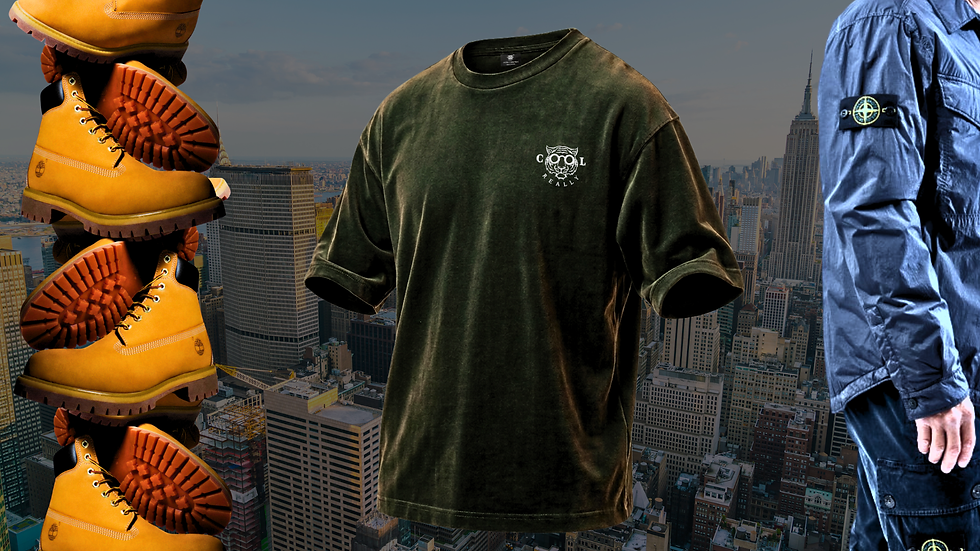
Workwear, outdoor gear, uniforms, certain forms of footwear, bags, and everyday clothing all demonstrate this trajectory. Their original functions remain, but over time they also signal membership, context, or attitude.
Utility becomes identity when the function is so consistently associated with particular conditions of life that the object itself begins to stand for those conditions.
Products Can Become Cultural Shortcuts
Certain products, silhouettes, materials, or constructions eventually operate as cultural shortcuts.
Their appearance is enough to evoke a profession, a city, a community, a lifestyle, or a historical moment. The object may require less explanation because its form and function have become legible within a shared visual language.
This is one of the ways clothing, in particular, functions as cultural language.
The garment carries both practical information and social information at the same time.
Why Clothing Is Different
Clothing occupies a distinctive position among useful objects.
It is worn directly on the body.
It must accommodate movement, climate, and the requirements of daily life.
At the same time it participates in identity, social signaling, and self-presentation. Because it is both functional and highly visible, its utility is more readily converted into cultural meaning than that of many other categories of object.
A chair or a tool can become culturally significant.
A garment does so while remaining in continuous contact with the body and with the public gaze.
The T-Shirt Is a Cultural Utility
The T-shirt is one of the most flexible everyday objects in contemporary dress.
It can function as underlayer, workwear, sportswear, uniform, leisurewear, or standalone essential. Its cultural power comes partly from how often and how widely it can be used. Because it appears across so many contexts, the decisions that shape a T-shirt, proportion, material, construction, fit, are continuously tested against real life rather than against occasional occasions.
In contemporary fashion, the T-shirt is one of the clearest examples of how an everyday garment can move between utility, identity, and cultural meaning.
Its simplicity does not reduce its cultural potential. It increases the clarity with which its design decisions are read.
Function Does Not Mean Neutrality
Function is sometimes mistaken for the absence of character.
In practice, function can generate distinct identity.
Material, proportion, construction, and the way a garment moves can all give a useful object a recognizable presence.
Neutrality is not the inevitable result of usefulness. A product that performs a clear role with consistency and physical integrity can develop a stronger identity than one that relies primarily on surface expression.
Function creates character when the way something works becomes inseparable from the way it looks and feels.
Why REALLY COOL® Looks Beyond Decoration
Decoration can attract attention. Function gives a product reasons to remain in use.
REALLY COOL® focuses on essentials because utility, material, proportion, fit, and construction can together form a coherent identity. When these elements are resolved, the garment does not need constant visual noise to remain recognizable. Its character emerges from how it sits on the body, how it behaves over time, and how consistently it performs the role it was designed to fill.
The interest is not in rejecting expression. It is in allowing function to become one of the sources of that expression.
From Useful Product to Cultural Object
Not every useful product becomes a cultural object.
The movement from utility to culture usually requires repeated use, recognizability, consistency, some degree of shared adoption, and time. These conditions cannot be forced by communication alone. They accumulate through lived experience.
Some objects remain purely practical.
Others gradually acquire the capacity to stand for something larger than their original task. The difference is rarely a single campaign or moment of visibility. It is the quiet accumulation of use.
What Culture Remembers
Culture is not always created by what receives the most attention.
Sometimes it forms around what people keep using.
A function repeated often enough can become familiar.
Familiarity can become recognition.
Recognition can become identity.
And eventually, an ordinary object can become part of the visual language of a culture.
Function does more than solve a problem.
Sometimes, it gives culture something to remember.


Comments